Introduction: Food line maintenance teams judge a sanitary ball valve by how it handles residue, cleaning access, and thick product flow rather than by how it looks on the shelf.
Anyone who has spent a shift on a food processing line knows the routine: a batch ends, a clamp comes off, and someone looks inside the valve to see what the last run left behind. That look tells you far more about a valve than its outside finish ever will. this guide follows that everyday maintenance view. It covers why residue control around the valve body and its joints matters more than appearance, how quick install connections change the way a valve comes off the line for service, and where a full-bore design earns its place when the product is thick, sticky, or full of pieces.
Residue is the quiet problem in a food line. Product runs through a valve for hours, and thin films form wherever the flow slows down or a small gap exists. The inside of the valve body, the recess behind the ball seat, and the narrow seam where a gasket sits between two clamp faces all give a film of product somewhere to stay after the line has been flushed. EHEDG hygienic design principles point at exactly this: equipment should avoid dead zones and stagnant pockets, and the wetted surfaces should be reachable by cleaning. A valve can look perfectly smooth on the outside and still hold product inside its joint, which is why experienced technicians open the connection and look rather than trusting the exterior. Residue matters most at changeover. A dairy line moving from a plain base to a flavored one, a sauce line switching from mild to spiced, or a beverage line changing color all share the same risk: whatever stays in the valve ends up in the next batch. That is why the maintenance habit is to crack the clamp joint and inspect three things — the gasket, the two sealing faces, and the bore around the ball — before anyone declares the line clean. Material choice sits alongside that habit. Food-contact parts are commonly built in 304 or 316L stainless steel, and food-contact elastomer rules are set out in FDA 21 CFR Part 177, which is the background most plants work from when they talk about wetted materials.
Connection type decides almost everything about service. "Quick install" describes a family of options rather than one single behavior, and a clamp-ended valve versus a welded one can be the same ball valve body in two very different maintenance situations. Sanitary valves manufacturers commonly offer both versions of one valve, and plants sometimes weigh those against other isolation styles, including the butterfly valves manufacturers they already buy from, when they decide how a line should come apart. For the maintenance learner, the useful question is simple: what actually has to happen on the floor when this valve needs cleaning or replacement?
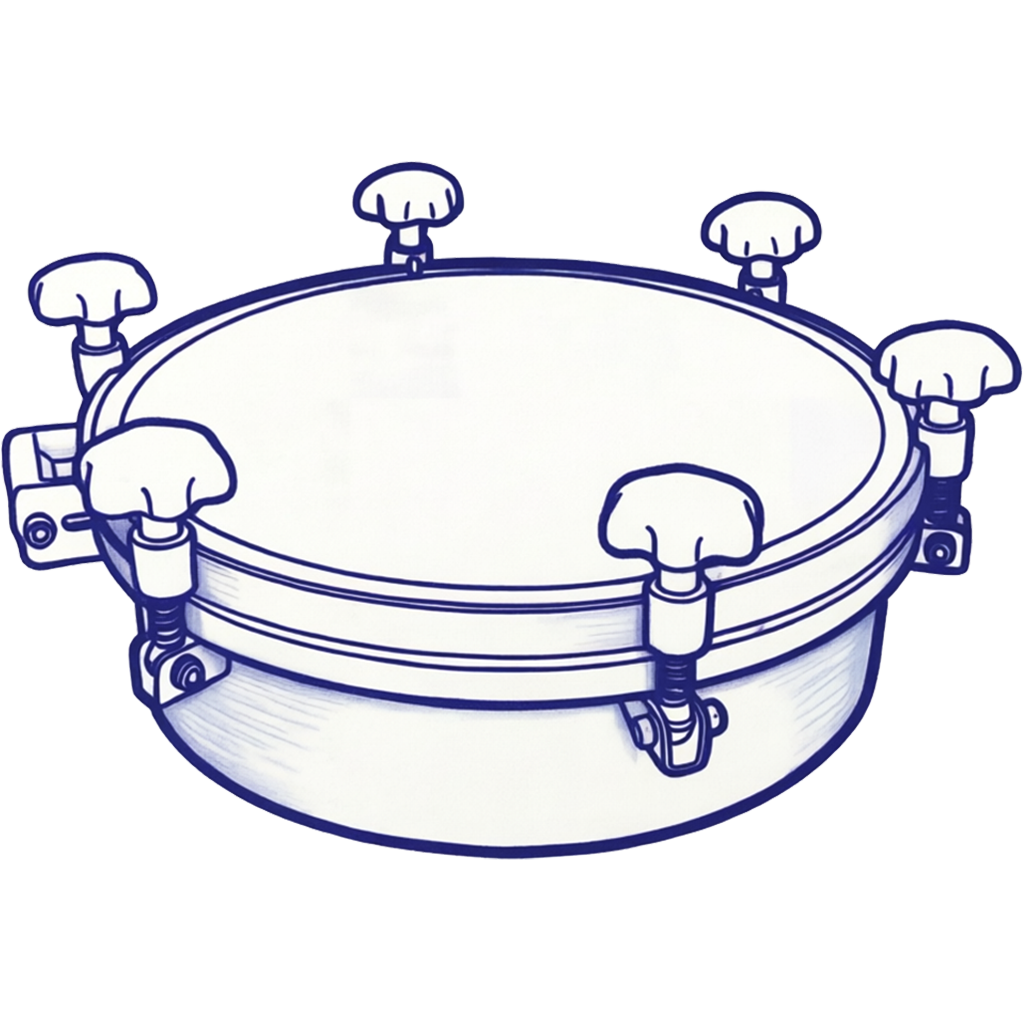
With a clamp end, the connection is two flanges held together by a clamp, with a gasket seated between them. Undo the clamp and the joint opens, which gives a technician direct access to the gasket, both sealing faces, and the valve inlet. That access turns residue inspection into something you can see rather than guess at: wipe the faces, check the gasket seat, look into the body around the ball. It also shortens the path between "this valve needs attention" and "this valve is open on the bench." A welded joint never offers that; the only way in is through the pipe, so cleaning and inspection depend on flow and chemistry rather than on hands and eyes.
Weld ends are permanent by design, so the valve becomes part of the pipe. Service means cutting and rewelding, which is planned work with a welder and a schedule, not a quick swap. Threaded NPT ends can be unscrewed, but the thread itself is a spiral gap and thread sealant becomes part of the joint, so the cleaning routine around that connection changes. Pin connections behave differently again. The practical takeaway is that a clamp-ended valve is what makes a fast, on-the-floor replacement possible, while the same valve with weld ends stays a strong choice but its removal is a scheduled job. That is also why plants keep a spare clamp-ended valve of the matching size on the shelf.
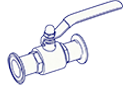
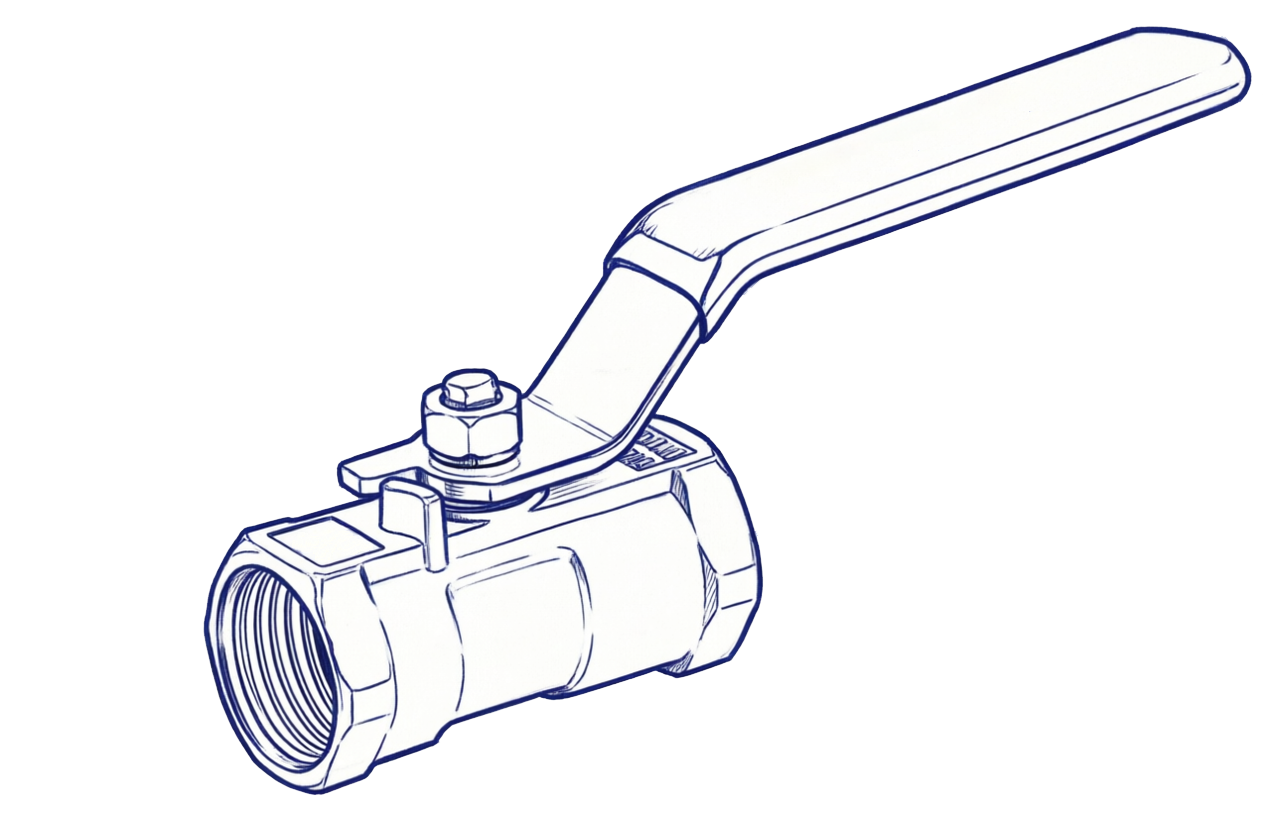
In a full-bore ball valve, the opening through the ball tracks the internal diameter of the pipe closely enough that the flow path stays essentially straight, with no step down and back up. For water-thin liquids this is a small detail. For syrups, sauces, cream, fruit prep, and mashes it is a big one, because a restriction forces thick product to accelerate and shear as it passes, and the pressure loss across that restriction climbs as viscosity rises. Likemetals lists a full-bore design with minimal pressure drop for its quick install sanitary ball valve, and the bore is how that behavior is achieved. The valve still adds some resistance to the line; the point is that the bore removes the narrowing step that would add much more. Particle-containing foods make the same argument in a more visible way. A reduced bore creates an internal ledge and a narrowed throat, and fruit pieces, herbs, seeds, or pulp can catch on that ledge as product moves past. Pieces squeezed through a narrow throat can crush or smear, which changes texture and leaves a film behind on the way out. Full-bore flow removes the ledge and gives particles a straight path through. It also simplifies cleaning, because a bore without a narrow pocket gives rinsing a simpler route. Wetted surfaces still contact the product, so material grade and surface finish remain part of the decision; the full-bore geometry simply removes one avoidable place for product to sit.
The maintenance view of a food line valve comes down to three things. Residue control depends on geometry and joints, not on how polished the outside looks, so the clamp joint, gasket seat, and ball cavity deserve the attention. Quick install is a property of the connection rather than a universal promise: clamp ends open quickly, weld ends are planned work, and threaded ends bring their own cleaning routine. Full-bore flow pays off whenever the product is thick or carries pieces, because a straight path through the valve keeps product moving and leaves less behind. Readers who want to see the documented configuration of one option can review the valve's material, connection, and bore details on the listing.
A: They combine a straight-through bore with a connection that can be opened on the line. That means product moves through with little restriction, and the joint can be taken apart for inspection, cleaning, or replacement without cutting pipe. For lines that change product often or need a valve swapped during a short window, that combination of flow and access is the main reason the style shows up so widely.
A: No. Easier access makes cleaning and inspection faster and more thorough, but the valve still contacts product and still needs a cleaning routine. The clamp joint simply lets a technician reach the gasket, sealing faces, and bore directly, which supports inspection instead of replacing it. Plants still plan cleaning around their own product, chemistry, and schedule.
A: The bore through the ball matches the pipe closely, so thick product passes without a narrowing step that would raise pressure loss and shear the fluid. With pieces in the product, the straight path also removes the internal ledge where fruit, herbs, or pulp can catch and build up. The result is smoother flow and fewer places for residue to collect.
316L Stainless Steel Quick Install Ball Valve
Pipe and Tube System Components - Minor (Dynamic) Loss Coefficients